
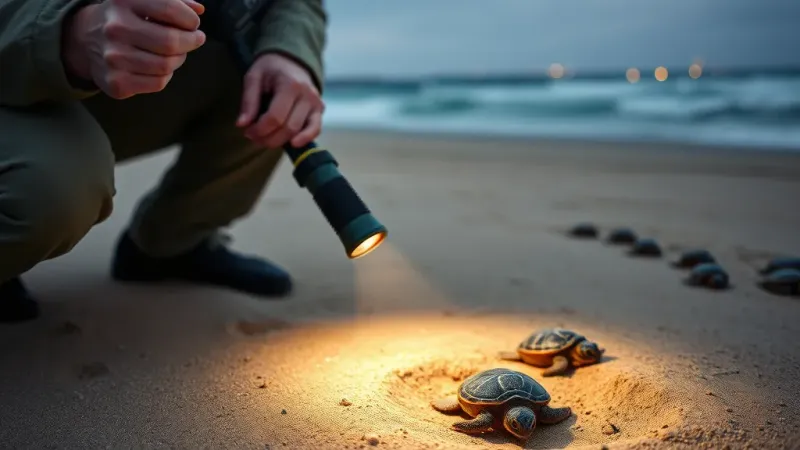
A remarkable and historic wildlife development has unfolded in Southern California, centered specifically around the successful emergence of fifty-four olive ridley sea turtle hatchlings. This notable event provides a rare window into marine biology and conservation efforts taking place along the coast. According to the recorded timeline of the emergence, the very first hatchling made its appearance around seven-fifteen p.m. on Friday, signaling the beginning of the hatching process for this particular group.
The origins of these particular sea turtles trace back to late summer nesting behavior. The eggs that ultimately led to this recent Southern California emergence were originally laid September sixteen on Seal Beach. Recognizing the importance of safeguarding the marine life, federal biologists intervened in the handling of the clutch. According to the official documentation, federal biologists relocated Orange County eggs to the aquarium on September twenty-nine to ensure proper oversight.
The ongoing care and monitoring of these sea turtle eggs involve specialized containment measures across the region. Even following the recent and notable emergence of the fifty-four hatchlings, an additional fifty eggs remain in the cooler, continuing to be closely watched by authorities.
The regional scope of olive ridley sea turtle nesting activity extends to other nearby coastal areas as well. A separate containment effort is actively managed, given that a second cooler holds one hundred four eggs laid September nineteen in Huntington Beach. These Huntington Beach eggs represent another significant collection of marine life managed within the broader regional conservation framework.
Further up the coast, additional nesting activity has been documented as the season has progressed. A third olive ridley nest appeared November one on San Buenaventura State Beach. However, natural environmental factors and coastal conditions posed distinct challenges for this specific northern site. Specifically, high tides wiped sheltering sand off the Ventura nest, illustrating the vulnerable conditions that coastal sea turtle nests frequently face.
The successful emergence of the hatchlings brought considerable attention and excitement to those closely monitoring the animals. Dr. Lance Adams described the stunning visual transformation of the nesting site when speaking about the milestone. Dr. Lance Adams told News from California, across the nation and world - Los Angeles Times that the area "went from looking like smooth beach sand to an eruption of baby turtles." Summarizing the emotional and visual impact of this rare wildlife milestone, Dr. Lance Adams additionally told News from California, across the nation and world - Los Angeles Times that "It was very exciting. And very, very cute."