
Orange County residents suffering from persistent musculoskeletal and other types of chronic pain often find that traditional treatments may not always provide efficient relief. For individuals experiencing consistent pain from injuries, inflammation, or limited mobility, shockwave therapy may present a viable option for relief.
Shockwave therapy, also known as extracorporeal shockwave therapy (ESWT), is a non-invasive treatment method. It works by utilizing sound and pressure waves to trigger the body’s natural healing processes. The therapy delivers acoustic energy to targeted areas in nano- or microseconds, stimulating healing within soft tissues, ligaments, and tendons.
The treatment has been shown to increase blood flow to targeted areas and stimulate hormones and cells associated with the body’s natural healing process. According to some specialists, many patients experience an immediate post-procedure reduction in pain.
Shockwave therapy is employed for a variety of musculoskeletal conditions. Patients seeking this therapy come from diverse backgrounds and are treated for various types of injuries. For instance, athletes commonly use shockwave therapy to manage overuse injuries, while office workers dealing with repetitive strain may book sessions to address ligament and muscular discomforts. Chronic pain patients may also find the therapy beneficial.
A notable aspect of shockwave therapy is its non-invasive nature. Patients seeking this treatment may be surprised to learn they can drive themselves to and from appointments without accompaniment, as the procedure involves no medication, anesthetic, or sedation. It requires no surgery, no medication injections, no incisions, and consequently, no downtime typically associated with traditional surgeries or other treatments.
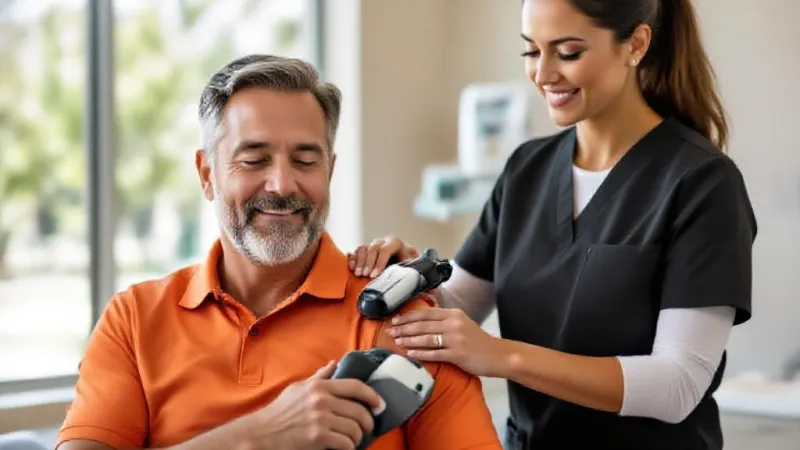
During a typical session, a technician exposes the injured area and uses a shockwave therapy device to deliver the treatment. The process increases blood flow in the treated area, which may lead to some bruising. Individuals undergoing the therapy commonly report feeling fast pulses and a sensation of warmth. Some specialists indicate that the discomfort experienced during a session is typically "less than a 5 out of 10" on the pain scale, although patients may experience mild to moderate discomfort depending on the treatment area and their sensitivity, often described as a tapping or pulsing feeling.
Patients may observe gradual improvement after multiple sessions. The therapy is designed to reduce pain, improve mobility, and support long-term recovery, particularly when combined with other rehabilitation strategies and exercises.
For those seeking treatments that may offer lasting relief, shockwave therapy is presented as an option that may stimulate blood flow, encourage local cellular repair, and support the body’s natural healing response. The number of required sessions can vary, depending on the specific condition and its severity. Some individuals may notice improvement after a few treatments, while others may require a longer treatment plan.
Shockwave therapy is generally considered safe when performed by trained professionals. However, it is important to note that it may not be suitable for all individuals, particularly those with specific medical conditions. Results from the therapy may develop gradually as the body responds to treatment, with some patients reporting improvement within weeks, while others may take longer, based on their condition.