
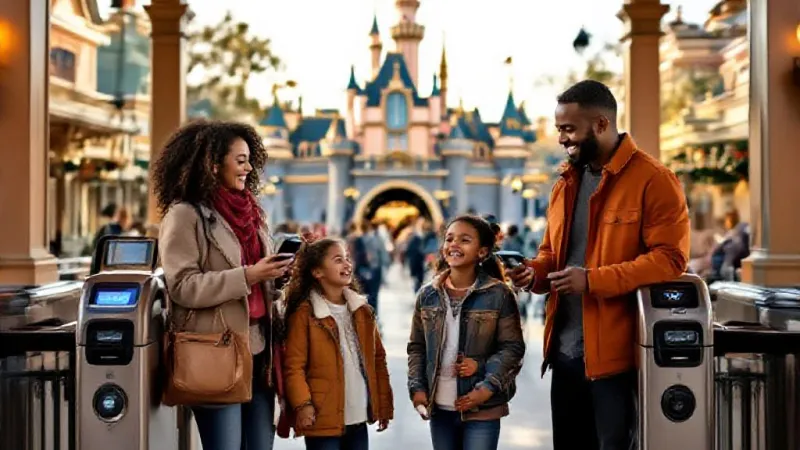
Starting Tuesday, Disneyland guests will see changes in ticket pricing, marking an annual fall tradition for the theme park. However, these increases are relatively light compared to past years. For the eighth consecutive year, the lowest-priced ticket, at $104, did not see a price hike. Similarly, the highest-priced ticket, set at $224, also remained unchanged.
The adjustments primarily affected mid-level tiers for single-day, single-park tickets, with increases limited to $5 apiece. Other popular options, such as the Magic Key annual pass program, saw no price changes, nor did multi-day tickets or parking, which remains fixed at $40. Collectively, these adjustments represent one of the smallest overall increases from the Disneyland Resort in recent history, especially when compared to last year's $18 jump for its highest-priced single-day ticket.
While the Walt Disney Co. offered no official statement regarding the increases, Disneyland Resort officials noted in an email that they are aware guests are more closely watching their wallets in 2026. Thomas Mazloum, chairman of Disney Experiences, commented to CNN that the company's goal is "to put guests at the center of our decision making," and this focus is increasingly important "when families are watching every dollar." This approach suggests the Disneyland Resort may have reached the practical limits of its pricing for the time being.
Recent attendance figures for U.S.-based Disney parks show fluctuations. In May, the Walt Disney Co. reported a 1% decline in attendance compared to the previous year, which it attributed to "continued softness" in international visitors. However, attendance perked up in August, particularly at Florida’s Walt Disney World, leading to an overall 3% increase in visitation at its U.S.-based theme parks in the third quarter compared to the prior year, a boost largely credited to various summer deals.
In conjunction with the price adjustments, Disneyland President Jill Estorino announced new policies aimed at enhancing flexibility for annual passholders. The company removed its no-show penalty for passholders, who can now cancel reservations up to 11:59 p.m. on the day of their visit. Previously, passholders faced restrictions after three no-show penalties and had to cancel the night before. While reservations are still required, which Disneyland states helps with crowd-forecasting and staffing, the system has become more user-friendly.
Further minor price changes include the line-skipping feature Lightning Lane, which now has a top price of $38, a $1 increase. The park-hopper add-on for single-day tickets also increased by $5 to $10, depending on the day. Earlier this year, Disneyland also raised prices on various food items.
Meanwhile, in Toluca Lake, Universal Studios Hollywood is confronting community concerns over its new Fast & Furious: Hollywood Drift coaster. The attraction is drawing the "ire of the park’s neighbors" due to the sound of rider screams drifting into residential areas. Universal Studios Hollywood held a meeting last Wednesday with over 350 nearby residents on its studio lot, a session closed to the media. Indications suggest the two sides have "still haven’t settled on a compromise."
In response to community feedback, Universal has pledged not to operate the coaster before 9 a.m. through the end of the year. The park also installed a new sound barrier, featuring an additional 1,900 square feet of sound-absorbing material, including a 63-foot-tall and 31-foot-wide sail. Despite these measures, residents expressed that they feel it is "not yet enough." Neighbors reported various disruptions, from an inability to open windows for homes without air conditioning, to impacts on home-based businesses offering meditation services, and a teen struggling to complete an SAT prep test due to incessant screaming. Many also reported insomnia linked to increased anxiety levels.
The meeting reportedly grew contentious towards its conclusion, with residents presenting data on how noise, specifically screams, can cause stress-related responses. Universal discussed the challenges in further mitigating the sound. County supervisor Kathryn Barger, who was in attendance, called for additional communication between the two sides. Barger stated via a statement that the meeting's dialogue highlighted how residents' lives are being impacted and disrupted, and encouraged all stakeholders "to maintain an ongoing honest dialogue."