
SACRAMENTO – Governor Gavin Newsom proclaimed a state of emergency for California on Monday, signaling state-wide preparations for what officials anticipate could be a historic El Niño season.
The declaration directs state agencies to stage equipment, protect critical infrastructure, and prepare communities for potentially severe winter weather. Forecasters indicate the looming El Niño event is already breaking records and is expected to strengthen, potentially becoming the strongest in recorded history.
Officials warn that El Niño could bring heavy rain, strong winds, mountain snow, and coastal flooding. Governor Newsom stated that this action is about giving communities the support they need, equipping first responders, and assuring families of state readiness.
El Niño is a natural climate pattern characterized by warmer-than-average ocean temperatures in the tropical eastern Pacific, which can shift weather patterns and bring wetter, more intense winters to California. A study published last month found El Niño events are now over 36% stronger than before the industrial era, with this trend accelerating over the last four decades.
According to the Governor's office, the emergency proclamation mobilizes state resources and streamlines procurement processes to prepare for anticipated impacts such as strong storms and coastal flooding. The declaration orders state agencies to lead flood-risk-reduction efforts, stage flood-fighting supplies like sandbags and pumps, and pre-position other critical equipment. Additionally, Governor Newsom stated the California National Guard will be called upon to assist with emergency response.
California Natural Resources Secretary Wade Crowfoot noted that the state is taking early steps to protect communities from potentially historic El Niño, acknowledging the seriousness of weather extremes driven by climate change.
Beyond physical preparations, the proclamation also directs the Governor’s Office of Emergency Services and other state agencies to expand multilingual public outreach. These efforts will focus on preparedness for severe weather, flooding, emergency alerts, evacuation readiness, and power outages.
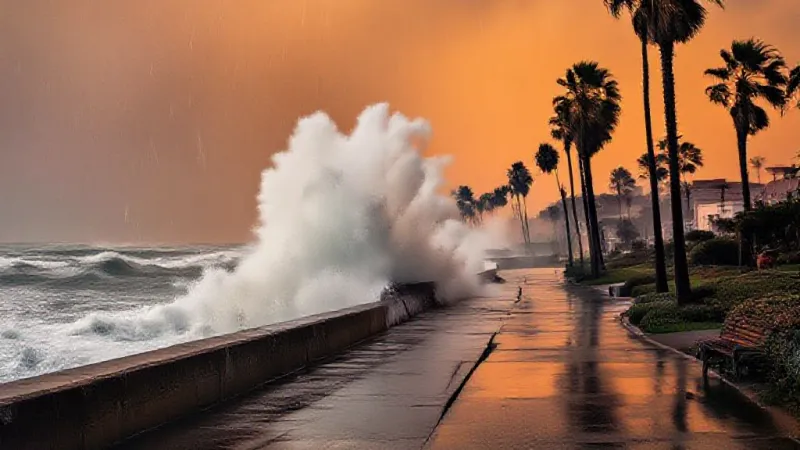
Forecasters project this fall and winter could be dangerous, with possible impacts including repeated heavy rain, strong winds, mountain snow, flooding, landslides, debris flows, large waves, and coastal flooding. Officials report a greater than 90% chance of a very strong event this fall and winter, with a 75% chance it could reach historic strength. The Pacific's unusually warm temperatures are expected to shift storm tracks and energize the atmosphere in the coming months. Weather forecasters cited huge waves fueled by Hurricane Marie earlier this month as a potential indication of El Niño's powerful effects.
Laura Hollander of the state Department of Water Resources noted during a virtual media briefing that Southern California, in particular, could anticipate increased storms during the El Niño season. She also raised concerns about coastal erosion, especially as strong storms make landfall, and large waves predicted for November and December. Cal OES Director Caroline Thomas Jacobs warned, “People underestimate the power of water,” emphasizing that storms are among the deadliest disasters in California.
While a specific dollar amount for the preparedness effort was not immediately available, Brian Ferguson of Cal OES confirmed that officials urge Californians to prepare early given El Niño's strengthening nature.