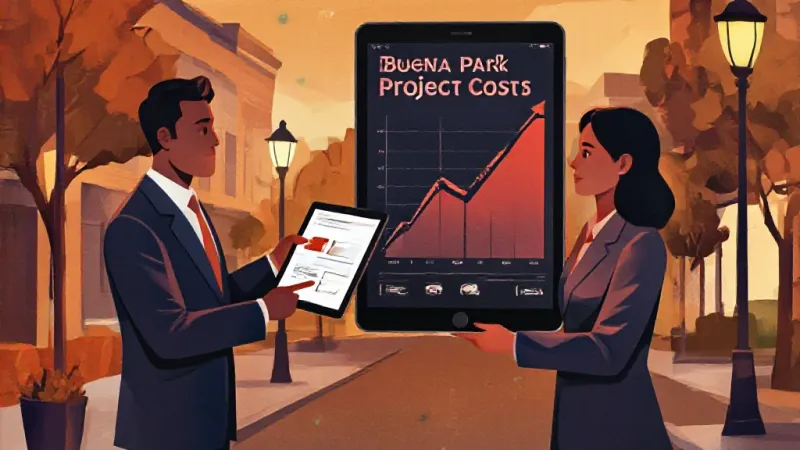
Buena Park’s implementation of a Community Workforce Agreement (CWA) for public construction projects has drawn increasing scrutiny, with critics contending the policy contributes to significant cost overruns and challenges in securing competitive bids.
The policy, initiated by Mayor Connor Traut, was approved by the City Council on March 8, 2022, and became effective July 1, 2022, for a five-year term extending until 2027. The agreement, also referred to as a Project Labor Agreement (PLA), is described by some as a “no-bid, sole-source labor contract.” Critics assert that these agreements effectively overcharge taxpayers for construction and discriminate against a large percentage of local construction workers.
In 2022, a Project Labor Agreement pushed by Mayor Traut was criticized for allegedly costing Buena Park taxpayers over a half-million dollars in overruns on a single project. Mayor Traut also reportedly changed the name of the controversial “Project Labor Agreement” to a “Community Workforce Agreement.” Local labor bosses, in a February 2025 online post, credited Mayor Traut's leadership for the City of Buena Park's adoption of its first Community Workforce Agreement for infrastructure projects.
Industry groups, including the Western Electrical Contractors Association and the Coalition for Fair Employment in Construction, had previously warned Buena Park about potential financial implications for taxpayers. Eric Christen of the Coalition for Fair Employment in Construction, in correspondence to Mayor Traut and Buena Park Councilmembers, cautioned that the agreement could lead to tens of millions of dollars in taxpayer costs.
Recognizing the need to review the policy’s impact, the Buena Park City Council scheduled an “Update on the City’s Implementation of the Community Workforce Agreement” in November 2023. Prior to this, City staff held a meeting with local union representatives to discuss “challenges” encountered with administering the CWA.
City staff reported specific difficulties in their review. They noted “challenges in receiving an adequate number of bids on some of the projects,” mainly attributing this to contractors’ “unwillingness to abide by the CWA.” This issue was particularly evident in projects requiring specialty work, such as pool and park improvements, and in soliciting professional services for geotechnical engineering and surveying for CWA-bound projects.
The practical impact of these challenges has been observed in recent project outcomes. In April 2024, the Buena Park City Council had to reject all bids for the Smith Murphy Park and Carl Brenner Park Accessibility Improvement Project, which was later renamed Friendship Park and Carl Brenner Park. Six bids were received for the project on March 28, 2024, ranging from $1,012,847 to $1,779,240. With the project budgeted at $800,000, the bids were between 30% and over 120% above the estimated cost, leading staff to recommend their rejection.
Another instance occurred in July 2024, where a City of Buena Park project received only one bid, which was 59% over the engineer’s estimate of $690,000. The bid amount totaled $1,099,628, exceeding the budget by over $400,000, and the sole bidder was not qualified.
These outcomes have reinforced concerns among critics that the CWA reduces the number of bidders and significantly increases costs for taxpayers. By implementing the agreement, critics argue the city has made it difficult for Merit Shop construction workers, apprentices, and contractors—who reportedly comprise 90% of the local construction workforce—to participate in city projects. The policy’s binding nature until 2027 means these challenges could continue to impact Buena Park’s public works budget for several more years.