
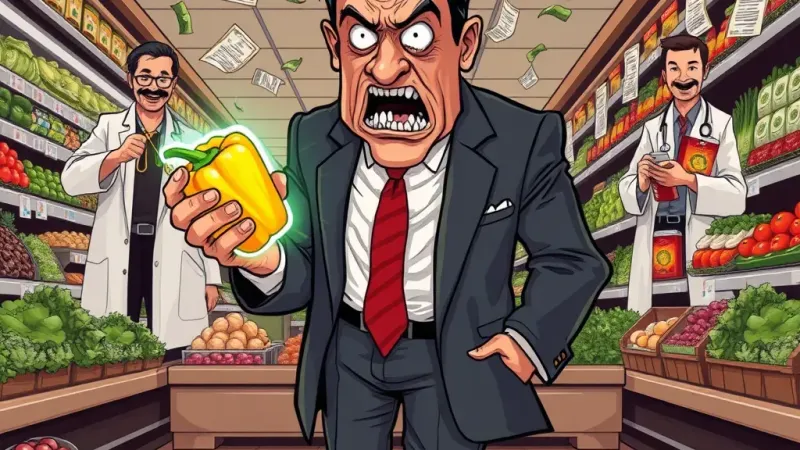
A terrifying new report reveals that one in four households earning a traditional middle-income salary are now regularly utilizing government food assistance, prompting an immediate, coordinated emergency response from economists who are desperately trying to find a synonym for 'destitution' that won't ruin a corporate earnings call.
The study, which defines middle-income using economic criteria last updated during the Carter administration, notes that families pulling in respectable salaries are now just two missed paychecks, a broken refrigerator, and a catastrophic dental emergency away from rationing store-brand canned corn. According to federal financial models, these households are entirely stable, provided they completely eliminate luxury expenses like fresh produce, basic healthcare, electricity, and the unconstitutional desire to not sleep inside a Nissan Altima.
'Let’s be entirely clear about the data here. These families are not poor; they are simply experiencing a temporary, multi-decade liquidity event,' explained senior economic analyst Marcus Vance, adjusting his tie while standing in front of a whiteboard that explicitly measures human misery in basis points. 'When a family of four spends one hundred and twelve percent of their combined take-home pay on rent, insulin, and daycare, they are engaging in classic middle-class budget optimization. Lining up at a community soup kitchen on a Tuesday afternoon is just a very proactive, community-driven way to diversify their calorie portfolio.'
Wall Street has responded to the news with cautious optimism, noting that if the middle class finally stops eating entirely, major food conglomerates can seamlessly pivot their supply chains toward luxury pet food, which currently boasts a much higher profit margin and doesn't complain about inflation. Furthermore, corporate landlords have reassured investors that tenants currently standing in line for surplus cheese still have plenty of collateral and emotional equity left to seize before formal eviction procedures even need to begin.
Adding insult to structural injury, financial literacy influencers across TikTok and LinkedIn immediately jumped on the data to explain that the struggling families simply lacked discipline. Content creators with ring lights and zero grasp of systemic reality posted three-part video series explaining that if middle-class parents skipped their daily cup of tap water, canceled their subscription to breathing, and ruthlessly cut out avocado-based meal replacements, they could easily save enough money to buy a ruined 18th-century barn in rural Nebraska by the year 2450.
Politicians on both sides of the aisle rushed to address the escalating crisis with their characteristic, breathtaking cowardice. Democrats proposed a deeply moving, non-binding resolution to feel slightly bad about the situation during a scheduled three-hour lunch recess, while Republicans suggested that struggling parents simply pull themselves up by their bootstraps, stop buying artisanal avocado toast, and instead harvest vital nutrients directly from ambient sunlight through sheer, unadulterated willpower.
Meanwhile, the affected families themselves report feeling deeply confused by their sudden downward transition. 'I always naively assumed the middle class was a place where you owned a modest house and didn't have to choose between your daughter's asthma inhaler and keeping the natural gas turned on through November,' said local father and recent food pantry regular David Miller, clearly misunderstanding the modern American economic social contract. 'Apparently, it just means you still wear a wrinkled polo shirt to your desk job while waiting in line for free peanut butter and expired saltines.'
Financial experts have urged the public to remain calm and focused on the broader picture, reminding working citizens that as long as the Dow Jones hits record highs every single quarter, anyone eating cold soup in the dark can take profound comfort in knowing they are part of a remarkably robust, statistically invisible tragedy.