
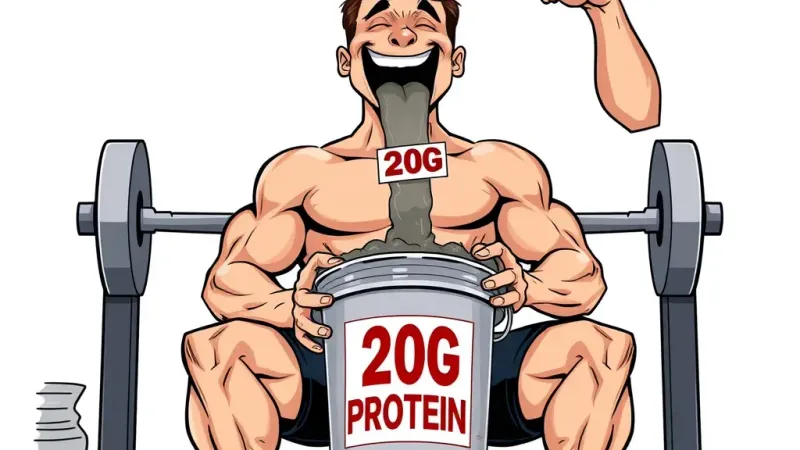
Reaching a state of peak physical optimization has never been easier, provided you are willing to consume products that were previously used exclusively in the construction of highway overpasses. Across the country, millions of adults are currently chewing their way through chalky, artificially flavored rectangles of industrial byproduct simply because a marketing department printed the sacred word 'PROTEIN' on the wrapper in a font size usually reserved for wildfire evacuation warnings.
Nutrition scientists note that this represents the third major mass hallucination of the modern grocery era, following the 1990s panic when we were all convinced that eating grey cardboard disguised as low-fat yogurt would grant us eternal life, and the 2000s crusade against sugar that turned America into a nation addicted to chemical sweeteners that taste like battery acid. Having successfully exhausted every other way to scare people into buying expensive garbage, the food industry has finally settled on the one macronutrient that completely absolves any product of having to taste good, contain actual food, or avoid calcifying your internal organs.
It does not matter if the item in question is a bag of potato chips, a carbonated beverage, or a liquid gel extracted from the runoff pipes of a rubber factory. If you inject four grams of hydrolyzed collagen into an otherwise rotting slurry of corn syrup and sodium benzoate, the packaging instantly transforms into a health food. Consumers are eagerly paying eight dollars for a single muffin that tastes like a damp basement, comforted by the knowledge that they are fueling their 'gains' rather than slowly destroying their pancreas.
The cultural vanguard of this movement is, naturally, the podcast-industrial complex. Influencers who look like they were drawn by an AI program that only knows how to render jawlines are currently instructing their audiences to consume their own body weight in powdered cow skin every single morning. These digital prophets stand in their minimalist kitchens, illuminated by ring lights, explaining that fatigue, depression, and a general lack of joy in your life are simply signs that you aren't eating enough pulverized slaughterhouse sweepings.
Never mind that the average American is already consuming roughly four times the daily recommended amount of protein, primarily through standard meals that do not require corporate laboratories to synthesize. The human body, long accustomed to processing a varied diet, is now attempting to filter out enough whey isolate to patch a driveway. Urologists report a sharp uptick in patients whose urine has the consistency and structural integrity of hardened epoxy.
Of course, pointing out that we are merely eating processed garbage with a better PR campaign is considered deeply impolite in modern wellness circles. To suggest that perhaps a carrot is more nutritious than a chemical bar engineered by a multinational conglomerate to have a three-year shelf life is to invite accusations of being anti-fitness. The market has spoken, and it demands that every single item in the supermarket aisle must either taste like chalk or kill you slowly.
Ultimately, the protein craze is not about health, longevity, or even physical strength. It is about the profound, comforting illusion that if you buy the right corporate-approved paste, you can outrun the passage of time and the quiet horror of your own mortality. Until the next dietary panic arrives to convince us that breathing oxygen is aging our skin, millions will continue paying a premium to eat industrial waste, secure in the knowledge that they are dying with exceptionally high muscle mass.