
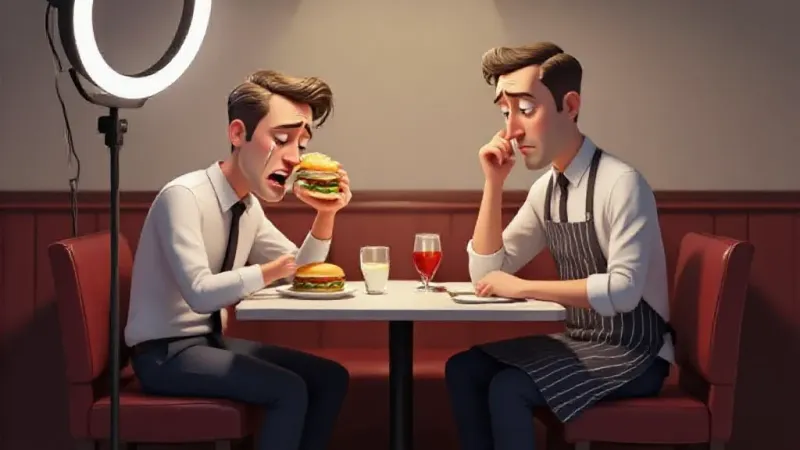
Revenge dining has officially crossed the threshold from pent-up pandemic enthusiasm into full-scale psychological hostage-taking, as local patrons increasingly treat neighborhood eateries less as places to consume calories and more as immersive theater spaces for their unmedicated personality disorders. Across the country, casual dining establishments have transformed into Colosseums where exhausted servers are forced to moonlight as emotional support animals, refereeing table-side existential crises over plates of lukewarm truffle fries.
According to industry insiders, the traditional transaction of exchanging currency for grilled proteins has been entirely replaced by an elaborate ritual of public main-character performance art. Diners no longer simply order dinner; they audition for an invisible audience of strangers, pacing the narrow aisle between tables while loudly conducting speakerphone therapy sessions about their boundary issues, or staring aggressively into their phones to ensure the ring light reflects properly in their artisanal negroni.
"We used to worry about whether the steak was medium-rare," said veteran floor manager Marcus Vance, staring blankly into the middle distance while wiping down a sticky mahogany table. "Now I have to spend twenty minutes kneeling beside a booth while a thirty-four-year-old crypto broker named Chad explains how his ex-girlfriend poisoned his aura, all because I forgot to bring the Heinz on the first pass. He didn't even want the ketchup. He just wanted someone trapped in a vest to nod sympathetically while he processed his formative rejection."
The phenomenon, which sociologists attribute to a toxic cocktail of algorithmic brain-rot and complete civic collapse, has turned the simple act of chewing into a blood sport. Patrons now arrive at family-owned Italian joints with the aggressive entitlement of feudal lords claiming prima nocta, demanding that the kitchen staff completely rebuild the carbonara to accommodate a dietary restriction they invented in the parking lot five minutes prior.
Waitstaff report an alarming spike in customers treating the menu like a Rorschach test, weeping softly into the calamari because the lemon wedge was insufficiently geometric, or standing up mid-appetizer to deliver impromptu TED talks to adjacent tables about the spiritual significance of sourdough starter. The food itself has become secondary—an incidental prop discarded as soon as the optimal angle for the overhead food-shot is secured.
"The meal isn't for eating anymore; it's content," said behavioral analyst Brenda Higgins. "When a guy screams at a hostess because his table isn't facing the natural light, he isn't mad about the seating arrangement. He’s performing authority in an environment where he has zero control over his actual life. Shouting at a teenager holding a basket of bread rolls is the only remaining American civic rite that provides an immediate dopamine hit."
Industry experts predict the trend will only accelerate as restaurants adapt by installing padded confession booths next to the coat check and hiring licensed therapists as assistant maitre d's. Until then, America's waiters will continue to carry the emotional baggage of millions of deeply fragile adults, one overpriced artisan slider at a time.
"I just want to pour the water and walk away," Vance whispered, watching a table of four business consultants vigorously argue about whose childhood was more neglected over a shared plate of shishito peppers. "Just let me pour the damn water."