
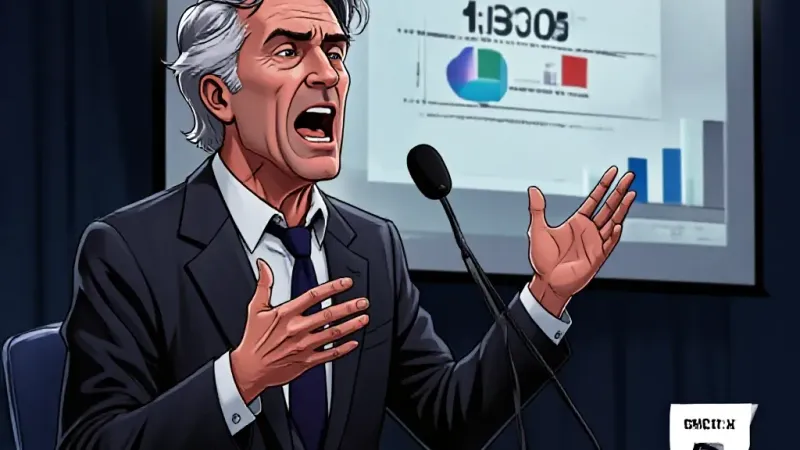
In a blistering assessment that shocked absolutely no one with an IQ above room temperature, Jon Stewart used his podcast this week to gently suggest that the Democratic Party’s ongoing strategy of aggressively curling into a fetal position and whimpering about norms might be why they keep losing to cartoon villains.
Speaking to an audience of people who desperately need a hobby, Stewart broke down the party's miraculous ability to snatch defeat from the jaws of victory with the precision of a surgeon who hates his patients. According to Stewart, the current leadership model relies entirely on a sophisticated political calculus known as 'hoping the other guy spontaneously combusts before Tuesday.' When that fails—which it reliably does every single time—the party responds by sending out an emergency fundraising email written in all caps by a panicked intern named Brayden.
Party leadership reportedly listened to the critique with the blank, uncomprehending stares of golden retrievers trying to comprehend calculus. Several high-ranking officials were spotted frantically checking their phones to see if they could pivot the conversation back to a heavily focus-grouped talking point about bipartisanship, a concept that currently exists only in the imaginations of affluent columnists who own vacation homes in Vermont.
For decades, the Democratic strategy has been defined by a deep, spiritual commitment to bringing a heavily formatted spreadsheet to a knife fight. Whenever an opponent introduces a policy designed to push the poor into active volcanoes, Democrats respond by forming a blue-ribbon subcommittee to draft a sternly worded memo about decorum. The memo is then quietly buried beneath a pile of donor-class thank-you notes, lest it accidentally offend a hedge fund manager who might otherwise donate fifteen dollars to a losing congressional campaign in Nebraska.
Stewart’s radical proposal—that perhaps politicians could try standing for something concrete instead of floating through Washington like polite ghosts afraid of making a draft—was met with immediate horror inside the beltway. Veteran strategists immediately warned that having an actual opinion might alienate the crucial demographic of moderate suburbanites who enjoy paying property taxes and pretending poverty doesn't exist.
'If we start talking about material changes to people's lives, we might have to actually deliver them,' said one anonymous consultant, speaking on the condition of total anonymity because he is currently billing the campaign $40,000 a month to lose elections in districts that haven't voted blue since the Lincoln administration. 'And frankly, delivering things ruins the entire business model. The grift only works if we remain the plucky underdogs who are permanently two weeks away from losing our democracy unless you click this link and give us five dollars right now.'
The brilliance of modern political management is its ability to reframe total institutional failure as a brave adherence to process. Every time the party gets wiped out, they don't analyze their policies; they analyze their branding. They hire a new firm to rebrand the disaster, swapping out the blue logo for a slightly softer shade of periwinkle, hoping that voters will mistake administrative incompetence for visionary leadership.
Ultimately, Stewart’s plea will be filed away in the same dark cabinet where the party keeps its discarded spine, its forgotten promises, and the manuscript of Hillary Clinton’s next book. Until then, leadership will continue doing what they do best: drafting a courageous, deeply nuanced press release condemning the very thing they lacked the courage to stop.