
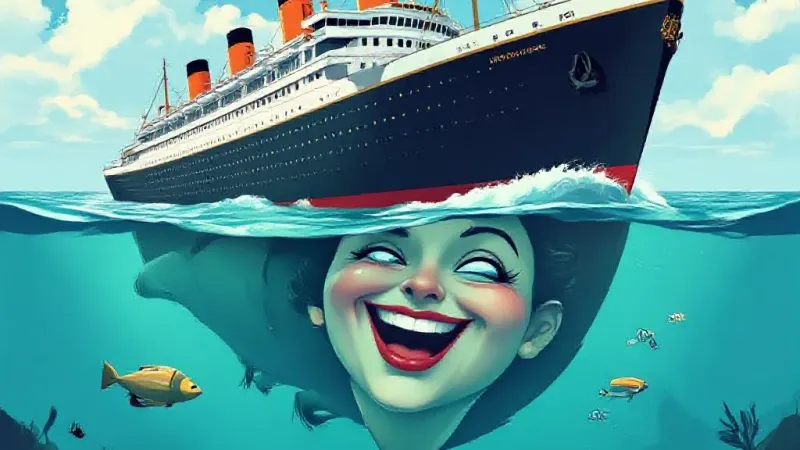
DESTIN, FL—In a triumphant display of historic preservation through total obliteration, maritime officials confirmed Tuesday that the SS United States is finally being towed out to the Gulf of Mexico to be intentionally scuttled as the world's largest artificial reef, successfully ending decades of expensive efforts to keep the floating palace from doing the exact thing it was scientifically engineered to avoid.
The majestic former flagship, which once ferried Hollywood royalty, presidents, and wealthy industrialists across the Atlantic in record-breaking time, will spend its golden years slowly dissolving into a toxic soup of lead paint and asbestos to provide studio apartments for local red snapper. City planners hailed the maneuver as a masterclass in recycling, noting that turning a priceless cultural artifact into a jagged underwater metal hazard is far more cost-effective than letting people look at it while it floats.
"For years, preservationists fought tooth and nail to save this floating cathedral of mid-century luxury, failing to realize that humanity’s highest duty to history is to push it into the ocean and let barnacles take the wheel," said regional marine deployment director Craig Higgins, wiping a tear from his eye as tugboats dragged the rusting 990-foot behemoth toward its watery execution. "Think of the scuba divers paying four hundred dollars a weekend to swim through rusted bulkheads and get trapped in old first-class ballrooms. That’s what we call heritage."
The sinking concludes a tortuous saga of bankruptcy, unpaid docking fees, and well-meaning historical societies proposing increasingly deranged schemes to repurpose the hull. Over the years, optimistic entrepreneurs suggested turning the ship into a floating hotel, a floating museum, or a floating office park for venture capitalists who desperately wanted their Zoom backgrounds to smell like bilge water. Rather than endure the indignity of a minor roof leak or a fresh coat of paint, stakeholders agreed that filling the interior with seawater and plunging it 130 feet straight down into the murky abyss was the only fiscally responsible way to honor its legacy.
Numerous billionaires and philanthropic foundations briefly expressed interest in saving the vessel before remembering they preferred hoarding their wealth in offshore accounts and private space programs. Faced with the choice between funding necessary repairs or simply drowning the problem where nobody could see it, modern capitalism naturally chose the option that involved heavy explosives and marine insurance payouts.
Environmental regulators confirmed that while the ship contains enough hazardous materials to legally classify it as a floating Superfund site, pushing it into the ocean technically counts as a "conservation initiative," a legal distinction that has thrilled both marine biologists and corporate liability lawyers. The National Oceanic and Atmospheric Administration praised the project for creating thousands of new square feet of prime real estate for creatures with brains the size of peas, who reportedly could not care less about the transatlantic speed record of 1952.
As the historic hulk slips beneath the waves this week, historians agree there is no more fitting tribute to American infrastructure than deliberately torpedoing our finest achievements because nobody wanted to pay for the upkeep. Future generations of deep-sea tourists will surely marvel at the majestic skeleton of human ingenuity, perfectly positioned to anchor fishing lines and snag amateur diving gear until the sun finally explodes.