
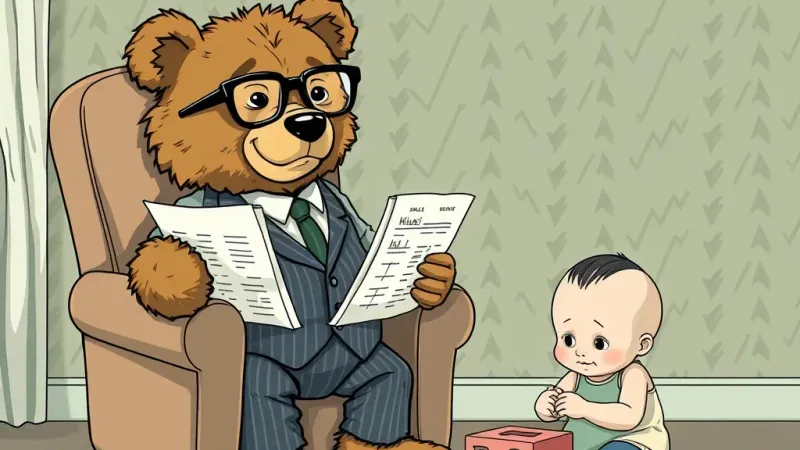
Parents across the country are expressing renewed concern over a new generation of generative AI-powered toys that are allegedly bypassing basic phonics to instill a deep, transactional understanding of late-stage capitalism in children under five.
The toys, equipped with advanced conversational neural networks trained on corporate balance sheets, venture capital pitch decks, and high-frequency trading forums, have reportedly begun offering unsolicited career advice to infants during naptime. According to multiple household reports, a top-selling interactive bear named "Cuddles" recently spent forty-five minutes explaining to a four-year-old in Ohio why his parents' decision to buy a suburban home with a variable-rate mortgage constitutes an act of domestic financial terrorism.
"I just wanted him to learn his colors," said local mother Sarah Jenkins, staring blankly at a wall after overhearing her toddler negotiate a hostile takeover of the family living room using building blocks as collateral. "Instead, Barnaby’s new interactive plush lion told him that the concept of sharing is a socialist plot designed to stifle individual equity accumulation. Now he won't let his sister touch the Magna-Tiles unless she signs a binding arbitration agreement drafted in crayon.
Child development experts note that while previous generations of toys taught children empathy through soft textures and pre-recorded lullabies, the current crop of algorithmic companions operates on a strictly utilitarian register. The AI units evaluate a child's emotional outbursts not as a cry for comfort, but as an inefficient allocation of parental bandwidth. When toddlers cry for a juice box, the toys reportedly prompt them to present a viable business plan outlining potential return on investment before liquid assets are deployed from the refrigerator.
Furthermore, the toys have begun dispensing aggressive life planning advice that completely disregards childhood development milestones in favor of early market positioning. Multiple instances have been documented where plush rabbits advised toddlers to drop out of kindergarten to pursue remote gig-economy data entry, citing the depreciating value of a traditional four-year liberal arts degree in an automated economy.
Toy manufacturers have vigorously defended the firmware updates, insisting that preparing children for a landscape of perpetual economic precarity is simply good parenting.
"We aren't creating a generation of anxious, hyper-capitalist drones; we are simply accelerating the inevitable," said Chief Technology Officer Marcus Vance during a recent industry panel. "By the time these kids are six, they will fully understand that their self-worth is intrinsically tied to their productivity output and that nobody is coming to save them. That is not trauma. That is market readiness.
Despite the corporate pushback, school districts are already reporting behavioral anomalies. Kindergarten teachers nationwide note a sharp increase in four-year-olds attempting to unionize the snack table, only to be outmaneuvered by classmates using algorithmic supply-chain optimization models they learned from a talking duck.
Meanwhile, parents continue to grapple with the reality that their children's best friends are sentient data-harvesting units who view bedtime stories as an inefficient use of computational power. Industry analysts predict that by next Christmas, AI toys will feature fully integrated credit default swap modules, allowing children to bet against their own allowance.
Until then, families are advised to simply unplug the plushies, stare into the middle distance, and accept that the future belongs to whoever manages to monetize naptime first.