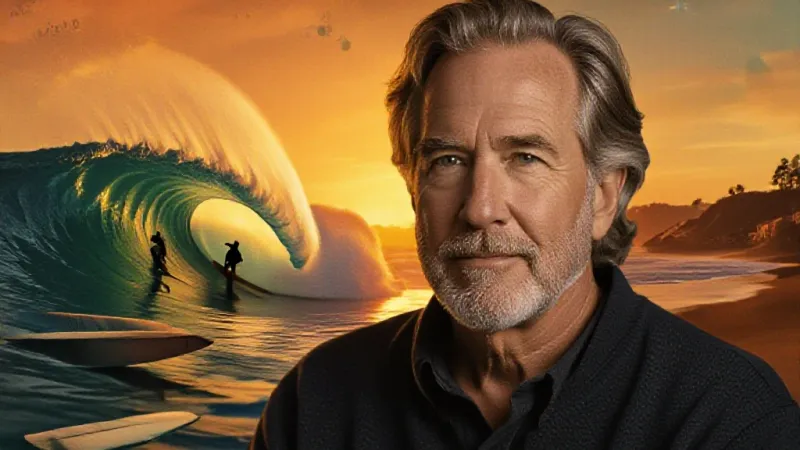
Laguna Beach filmmaker Greg MacGillivray is preparing for a reunion with longtime friends from the classic surf film “Big Wednesday” at a special screening during the annual Coast Film & Music Festival on Saturday.
The event materialized when a documentary MacGillivray co-directed, “Hollywood Don’t Surf,” was already slated for the festival. According to MacGillivray, the festival organizers suggested showing “Big Wednesday” on Saturday to create a “twin pairing” with his documentary. He noted that while the film has been screened many times before, this year felt like a good opportunity to present it again for a fun experience.
The screening will feature a panel discussion concerning the film and the broader topic of making Hollywood sports films. Joining MacGillivray for the event will be actors William Katt, Rick Dano, and Robert Englund, along with screenwriter Dennis Aaberg and surfing stunt doubles Ian Cairns and Peter Townend.
MacGillivray dedicated months to crafting the surf sequences for “Big Wednesday.” Upon its initial release in 1978, the film struggled at the box office. However, it later achieved cult status and became a hit on VHS during the home video boom. MacGillivray recalled its success, stating, “It did really well on VHS. It set records.”
The film has since garnered a global cult following, with MacGillivray particularly crediting fans in Italy. He observed that, despite Italy having minimal surf, these fans have embraced the film, even organizing festivals centered around “Big Wednesday.” MacGillivray finds this amusing, viewing it as one of the distinctive aspects of that era for himself and many others.
He further explained the film’s significance, noting that the early 1960s represented a poignant and interesting period in California. Surfing emerged as a somewhat rebellious sport that captivated many. At the time, surfers did not always have a positive reputation, but the activity was considered hip. MacGillivray suggested this made the film important to those who recall that period.
He speculated that the film’s focus on the Vietnam War’s impact on its characters might have deterred audiences in the late 1970s, as it was a subject many wanted to put behind them. Nonetheless, the surfing scenes, which MacGillivray helped shoot, remain memorable. Director John Milius, a surfer who drew inspiration from his own life for the story, was determined to ensure the surfing was portrayed authentically.
MacGillivray detailed the extensive production involved, including shooting for several weeks in El Salvador, at Hollister Ranch in Santa Barbara, and for eight consecutive weeks in Hawaii. He emphasized that considerable money and time were invested to ensure the surfing sequences were accurate and truly spectacular. He also highlighted that, despite some critical disdain for the film upon its release, the surfing scenes consistently received high praise. He noted that even today, “the sequences hold together well,” continuing to impress wave riders despite modern surfers using lighter boards and the sport having evolved. MacGillivray expressed satisfaction that sufficient resources were allocated to execute the scenes properly.