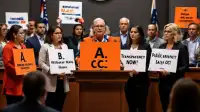

The California gubernatorial race is underway, presenting voters with a crucial decision regarding the state’s economic and social trajectory. Among the candidates vying for leadership, billionaire Tom Steyer’s proposed policies and overall approach have prompted significant discussion. His platform reportedly raises concerns for California’s fiscal health, its public safety landscape, and the business environment within the state.
One area of concern involves California's consistently high gasoline prices, which affect working-class families and daily commuters. Steyer’s environmental platform, though focused on climate change, emphasizes stringent regulations and restrictions on fossil fuels. This approach, critics observe, does not provide immediate or practical mechanisms to reduce energy costs. For residents grappling with the cost of living, a platform prioritizing top-down environmental mandates over immediate price relief is seen as unsustainable.
Another primary concern with Steyer’s platform is its alignment with highly progressive criminal justice policies. Critics argue that these policies focus heavily on systemic reforms, potentially at the expense of accountability and public safety. With many communities increasingly worried about retail theft, property crime, and overall public safety, an approach to prosecuting criminal offenses that is perceived as hands-off risks undermining the rule of law. This could leave local businesses and residents vulnerable.
California’s business environment currently faces burdens from complex regulations and high corporate tax rates. Steyer’s platform advocates for increased government spending, to be funded by higher taxes on corporations and wealthy individuals. However, historical economic data indicates that such policies can "trickle down, hurting the broader economy."
Beyond specific policies, a fundamental philosophical question surrounds Steyer’s candidacy: the attempt to self-fund a path to high office. Voters across the political spectrum are reportedly weary of wealthy individuals using personal fortunes to influence elections. A functioning democracy, it is suggested, thrives when leaders gain support through grassroots efforts and community service, rather than through extensive ad campaigns that may overshadow other voices.
Democrats in California reportedly have alternative choices, such as Xavier Becerra and Matt Mahan, who are presented as offering more pragmatic and experienced governance. California requires a leader who understands that environmental and social progress must not come at the cost of economic survival and public safety. Steyer’s platform, it is argued, risks raising taxes, deterring businesses, and potentially failing to secure local communities. For a stable and prosperous future, voters are encouraged to consider proven public servants offering balanced, accountable leadership.