
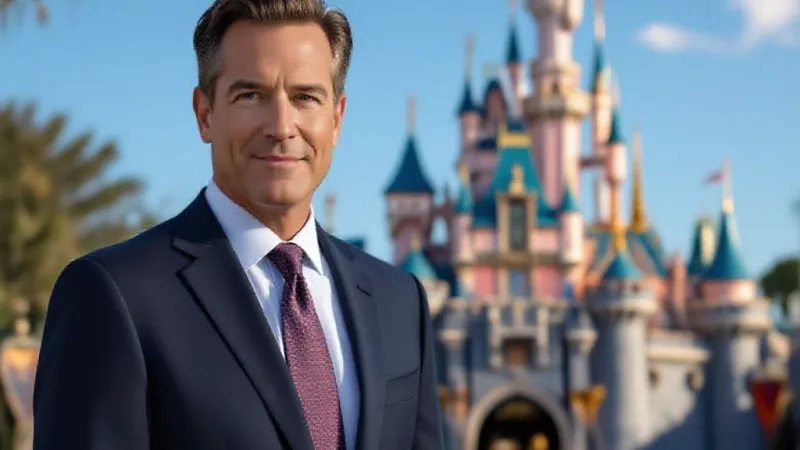
Former Walt Disney Co. Chief Executive Bob Chapek is defending changes made to the Disneyland experience during his leadership, many of which remain in place today. In his new book, “Behind the Castle Walls,” Chapek pushes back against being characterized as "just a maniacal, money-optimizing machine."
Speaking from his Florida home, Chapek indicated he is not concerned about this public image, stating, "I don’t give that any thought at this point." He affirmed pride in the parks segment's performance during his time as chairman of the parks division and later as CEO, noting, "The numbers bear that out."
Beginning in 2015 and over an eight-year period, Disneyland significantly raised prices and introduced add-on perks under Chapek's oversight. The annual passholder program underwent a complete remake, largely through substantial price increases and restricted access. For instance, the top-tier annual pass, priced around $800 in 2015, now costs $1,899. Single-day ticket prices also saw aggressive hikes, with a one-day, one-park ticket currently topping off at $224. Disneyland has frequently increased its prices in October each year.
Benefits previously included, such as the line-skipping Fastpass program, became paid perks under Chapek. Access to certain attractions was grouped into a package known as Lightning Lane, and popular rides like Star Wars: Rise of the Resistance were sold separately. These prices typically see yearly increases, with guests opting for Lightning Lane and individual access to Rise of the Resistance potentially paying an additional $65 per person after park entry.
Chapek states he encountered considerable internal opposition at Disney when implementing these changes. Walt Disney’s original dedication speech, which for decades signified guest equality and no special access, was seen as an "inviolable virtue." Chapek, however, states he was ready to break from this tradition, writing about it in his book. While acknowledging the original sentiment of equality, Chapek claims that guests today desire an experience "tailored to what they can afford."
The former CEO describes himself as a "disruptor" in his book, characterizing Lightning Lane-style add-ons as "bespoke" experiences for those seeking a more customizable visit. While these types of offerings are common across many theme parks, a previous report characterized them as creating a "haves-versus-have-nots" mindset for guests.
Chapek defended the pricing strategy, noting that the lowest one-day, one-park ticket price remained at $99 during his tenure, although it is now $104. While Disneyland has since increased the availability of its introductory price tickets, these often fall on weekdays, potentially requiring working families to take time off and children to miss school. When asked about criticisms, Chapek highlighted demand, stating, "Do people stop coming? That would obviously be a big concern." He noted that while annual passholder numbers, which are around 1.1 million for Disneyland's Magic Key program, might temporarily drop after price increases, they would typically rebound within about 12 months.
The company also introduced a reservation system during Chapek's leadership, requiring guests to plan their visits in advance. This system, coupled with price increases, aims to reduce spontaneous trips and help manage crowds and staffing, while limiting overcrowding.
During his five years as parks chairman, Chapek writes that profits within the segment rose by 18%, largely driven by an increase in individual guest spending. Chapek attributes the necessity of these changes to funding major new attractions, explaining, "In order to build things like Galaxy’s Edge and Avengers Campus, that takes capital. That capital takes revenue."
A previous report expressed concern that these changes could create a "slippery slope," where yearly price hikes become standard, and the company focuses on targeting the highest-spending consumers, permanently altering the approachability and affordability of a Disneyland visit. One area where Chapek and a previous report concurred was the early closure of the Star Wars: Galactic Starcruiser, which Chapek believes was shuttered too soon despite its ambitious design.